
%20(2).svg)

Duct Sealing in Allen, TX
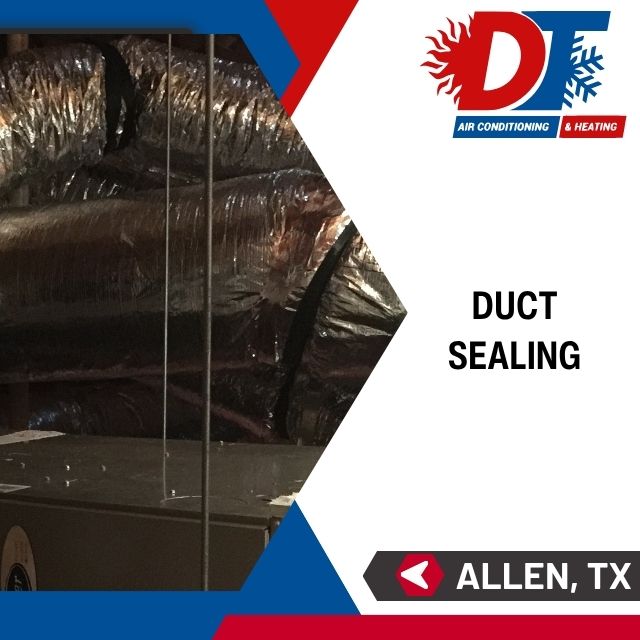
DT Air Conditioning & Heating services duct sealing in Allen, TX, to put the indoor climate and budget back in your hands. Our seasoned crew uses cutting-edge tools and time-tested techniques to discover the problem areas and seal your ducts up tight. If your energy bills have been rising recently or the HVAC unit seems to be working at its job, our duct sealing would restore efficiency and comfort quickly.
The Importance of Duct Sealing
A duct system with leaks can reduce your heating and cooling efficiency by 30%. It is not just about wasting money; it is about losing air through the vents, crawlspaces, attics, and basements. Meanwhile, while cooling off unused areas in the home, all the work in the main building's living spaces becomes difficult.
We at DT Air Conditioning & Heating take this seriously. Sealing ducts involves saving money, optimizing your HVAC system's performance, and creating a healthier, more comfortable living environment. When ductwork is sealed properly, air flows more evenly throughout your home, your indoor air quality improves, and your HVAC system doesn't have to work as hard, meaning fewer breakdowns and a longer system lifespan.
Signs Your Allen, TX Home May Need Duct Sealing
Not every duct leak is immediately visible, but your home may provide several warning signs that your ductwork needs professional attention. Rooms that remain warmer or colder than others, weak airflow from certain vents, excessive dust, unusual HVAC noises, and steadily increasing energy bills can all point to leaking or poorly connected ducts. If your air conditioner or furnace seems to run longer than usual without maintaining a consistent indoor temperature, the duct system may be allowing conditioned air to escape before it reaches the rooms where it is needed.
Duct Sealing vs. Duct Replacement
Duct sealing can be an effective solution when the existing ductwork is generally in good condition but has gaps, loose connections, cracks, or other areas where conditioned air is escaping. However, severely damaged, deteriorated, undersized, or poorly designed ductwork may require duct replacement instead. A professional inspection can help determine whether sealing is enough to restore proper airflow or whether replacing portions of the system would provide a better long-term solution.
Choosing the right approach can help prevent unnecessary expenses while improving the overall performance of your HVAC system.
Improve HVAC Efficiency With Professional Duct Sealing
Properly sealed ductwork allows more of the conditioned air produced by your HVAC system to reach its intended destination. This can help reduce unnecessary system strain, improve airflow, and create more consistent temperatures throughout your Allen home. Duct sealing can also complement other HVAC services, including regular maintenance, filter replacement, and indoor air quality improvements. By addressing air leaks before they contribute to larger comfort or efficiency problems, homeowners can take a proactive approach to maintaining a more reliable and energy-efficient HVAC system.



What Makes Us Different in Duct Sealing Service
For over 25 years, we have proudly served Allen, TX, and duct sealing is one of the best services we offer for improving HVAC performance. Here are the reasons more homeowners trust us to get the job done right:
- ✔ Fast and Reliable
Time is a priceless commodity. Our team will arrive on time to avoid wasting yours. They also work fast and will always keep you in the loop: no waiting, no mess, and no guesswork.
- ✔ Skilled Technicians
Merely trained members are hardly good enough for our team; seasoned professionals diagnose and solve even the trickiest ductwork problems with industry-leading tooling so your ducts are tight-sealed and air-delivered where it is supposed to.
- ✔ 25 Years of Experience
With more than two decades of experience under our belts, we've seen it all. With real-world knowledge brought into every undertaking, you can trust that your system is in good hands.
The duct sealing procedure we follow
Our duct sealing process begins with an inspection of the ductwork. Employing specialized equipment to locate leaks and measure airflow, we also assess the condition of the duct system at this stage. After sizing up the weak points, our technicians apply professional-grade sealants and reinforcements to close any gaps, cracks, or loose joints.
What's in it for you? An efficient HVAC system, comfortable home room temperatures, and energy bill savings.
Advantages Beyond Comfort
Sealing ducts provides temperature balancing and contributes to a healthy home. Not only do leaky ducts bring in dirt, allergens, and other pollutants from attics and crawl spaces, but adequately sealed ducts help improve indoor air quality while extending the lives of HVAC filters.
Here's what you can expect after sealing:
- Equalized temperatures throughout the house.
- Reduced cycling and wear of HVAC.
- Lower utility bills every month.
- A breath of fresh air.
Frequently Asked Questions
1. How do I know if my ductwork needs sealing?
Common signs include uneven temperatures between rooms, weak airflow, rising energy bills, excessive dust, and an HVAC system that runs longer than expected. A professional duct inspection can identify leaks and determine whether duct sealing is appropriate.
2. How does duct sealing improve HVAC efficiency?
Duct sealing helps prevent conditioned air from escaping through cracks, gaps, and loose connections. More heated or cooled air can reach the intended rooms, which may improve airflow and reduce unnecessary strain on the HVAC system.
3. How long does professional duct sealing take?
The time required depends on the size and accessibility of the duct system and the number of leaks that need to be addressed. After inspecting the ductwork, an HVAC professional can provide a more accurate estimate for your home.
4. Is duct sealing better than replacing ductwork?
It depends on the condition of the existing ducts. Sealing is often appropriate when the ductwork is structurally sound but has leaks or loose connections. Severely damaged, deteriorated, or improperly designed duct systems may benefit more from partial or complete replacement.
5. Can duct sealing improve indoor air quality?
Yes. Sealing gaps and leaks can help reduce the entry of dust and other pollutants from areas such as attics and crawl spaces into the duct system. When combined with appropriate filtration and other indoor air quality measures, properly sealed ductwork can contribute to a cleaner indoor environment.