
%20(2).svg)
AC Installation in Plano, TX
Installing a new air conditioner is one of the most significant home improvement decisions a Plano homeowner can make. Get it right and you enjoy years of reliable, energy-efficient comfort. Get it wrong — wrong system size, wrong equipment, or the wrong contractor — and you face higher energy bills, frequent repairs, and a shortened system lifespan. At DT Air Conditioning & Heating, we specialize in AC installation in Plano, TX that is sized precisely for your home, matched to your budget, and backed by the craftsmanship our community has come to expect from us.
Whether you are replacing an aging unit, upgrading to a high-efficiency system, or installing air conditioning for the first time, this guide walks you through everything you need to know before you call — and why the installation itself matters just as much as the equipment you choose.
What Does AC Installation in Plano, TX Include?
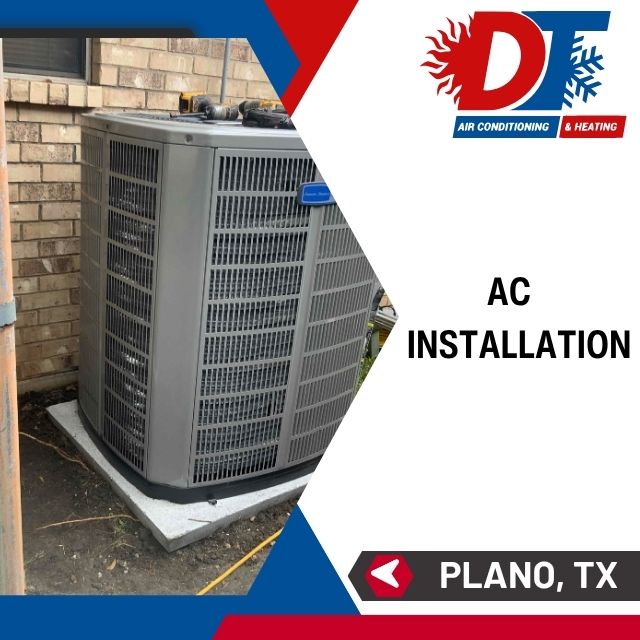
Professional AC installation in Plano, TX involves a load calculation to size the correct unit for your home, removal and disposal of your old system, installation of the new air handler and outdoor condenser, connection to existing ductwork or new duct fabrication, refrigerant charging, electrical hookup, thermostat programming, and a full system performance test. A licensed HVAC contractor also pulls the required permits and ensures the installation meets Texas building codes. DT Air Conditioning & Heating handles every step in-house with no subcontracting.
When Is the Right Time for a New AC Installation in Plano, TX?
Plano summers are not forgiving. With temperatures regularly climbing above 100 degrees for weeks at a time, your air conditioner is one of the hardest-working systems in your home. If you are seeing any of the following, it is time to have a serious installation conversation:
- Your current system is 12 to 15 or more years old and struggling to keep up with summer heat
- You are spending more on AC repairs than the system is worth, and breakdowns are becoming routine
- Your energy bills are climbing every summer despite consistent usage habits
- Your home has hot spots, rooms that never cool properly, or uneven temperatures throughout the day
- Your system uses R-22 refrigerant, which is no longer manufactured and is now costly to source
- You are adding square footage or completing a renovation your current system cannot handle
- You are moving into a home with an aging or undersized unit
If you are not certain whether a new installation or a targeted repair is the right call, our AC replacement services in Plano, TX page walks through the decision framework in detail, including the $5,000 rule and other practical tools for evaluating your current system.
What Is the $5,000 Rule for HVAC?
The $5,000 rule is one of the most practical guidelines in the HVAC industry for deciding whether to repair or replace an aging system, and it comes up often when homeowners are researching AC installation in Plano, TX.
The $5,000 Rule Explained
Multiply the age of your air conditioning unit in years by the estimated repair cost in dollars. If the result exceeds $5,000, replacing the system is generally the smarter financial decision.
Example: A 10-year-old system facing an $800 compressor repair equals $8,000. That exceeds $5,000, which means replacement is likely the better investment over the long term.
The rule exists because older systems cost more to operate and become increasingly unreliable as components approach end of life. Even if you can fix today's problem, another failure is often right behind it. A new high-efficiency system typically pays for itself within several years through lower energy bills alone.
The $5,000 rule is a starting point, not a final verdict. Factors like remaining warranty coverage, the specific component that failed, and whether the system has had recent work done all affect the calculation. Our team will walk you through the full picture so you can make a confident, informed decision.
How Much Is AC for a 2,000 Sq Ft House in Plano, TX?
Cost is the first question most homeowners ask, and it is a fair one. The honest answer is that AC installation costs vary based on several factors, but for a 2,000 square foot home in Plano here is what shapes the total:
- System size: A 2,000 sq ft home in North Texas typically requires a 3.5 to 4 ton system, depending on insulation levels, ceiling height, window orientation, and sun exposure.
- SEER2 efficiency rating: Higher-efficiency systems (18 SEER2 and above) cost more upfront but deliver significantly lower monthly energy bills. Many Plano homeowners find the long-term savings justify the premium.
- Brand and equipment tier: Entry-level, mid-grade, and premium equipment tiers carry different price points. We carry multiple brands and match the right tier to your goals and budget.
- Ductwork condition: If your existing ductwork is leaking, undersized, or improperly configured, repairs or modifications add to the project cost. Failing to address duct problems will undermine even the best new system.
- Additional components: Variable-speed air handlers, smart thermostats, air purification systems, and zoning controls are optional upgrades that affect the total investment.
We provide written, itemized estimates before any installation begins with no surprise charges. Financing options are also available for qualified customers. Contact us at 972-633-9343 to schedule your free in-home assessment and get accurate pricing for your specific home.
What Is the Most Expensive Part to Replace on an AC Unit?
Understanding what drives repair costs helps homeowners make better decisions about when repair is reasonable and when a full AC installation in Plano, TX makes more financial sense.
The Compressor
The compressor is the single most expensive component in a residential air conditioning system. It is the engine of the cooling process, pressurizing refrigerant and driving it through the system. Compressor replacement on a mid-range residential system is a significant expense, and on an older unit that also requires refrigerant, additional labor, and related part replacements, the total can approach or exceed the cost of a new installation. For systems under warranty, replacement is often the right call. For systems over 10 years old without warranty coverage, a new installation typically delivers far better long-term value.
The Condenser Coil
The outdoor condenser coil transfers heat from your home to the outside air. When it develops a refrigerant leak or sustains damage, replacement is complex and costly, particularly on older systems where parts availability is limited. In many cases, a failed condenser coil on an aging system makes new installation the more economical path.
The Evaporator Coil
The indoor evaporator coil is also a high-cost repair, especially when a refrigerant leak requires the coil to be replaced and the system to be fully recharged. If the coil failure is due to age-related corrosion, the same problem is likely to recur in other components in the coming seasons.
If your system is facing a major component failure and you are weighing your options, our AC repair services in Plano, TX page explains how we evaluate these decisions and what a professional diagnostic looks like before you commit.
What Is the Lifespan of an AC Unit in Plano, TX?
The average lifespan of a central air conditioning system is 15 to 20 years under ideal conditions. In Plano and the broader North Texas climate, where systems run heavily for five to six months of the year and face extended periods above 100 degrees, realistic expectations are closer to 12 to 17 years.
Several factors significantly affect how long your system lasts:
- Maintenance history: Systems that receive annual professional tune-ups consistently outlast those that run without service. A well-maintained system can reach or exceed 17 years. A neglected one may fail in 10 or 11.
- Proper sizing at installation: An oversized system short-cycles, turning on and off frequently without completing a full cooling cycle. This is harder on components and dramatically reduces system life. Proper load calculation at installation is not optional — it is essential.
- Quality of the original installation: Improper refrigerant charge, poor duct connections, and incorrect electrical configuration all shorten system life. This is why who installs your system matters as much as what system you buy.
- Equipment quality and efficiency tier: Better-built systems with higher SEER2 ratings typically use more durable components rated for longer service life.
- Filter maintenance: Dirty filters restrict airflow, force the system to work harder, and accelerate wear on the blower motor and coils. Replacing filters on schedule is one of the simplest ways to extend system life.
If your system is approaching or past the 12-year mark, proactive annual maintenance becomes especially important. Our AC maintenance plans in Plano, TX are designed to maximize system life and help you plan ahead for eventual replacement rather than reacting to an emergency.
Our AC Installation Process in Plano, TX
At DT Air Conditioning & Heating, every installation is a precision project, not a same-day swap. Here is what our process looks like from start to finish:
- In-Home Assessment and Load Calculation. We visit your home, measure the square footage, and evaluate insulation levels, window exposure, ceiling height, and existing ductwork. We then perform a Manual J load calculation to determine the exact system size your home requires. Guessing at tonnage is how systems get oversized or undersized — we do not guess.
- System Recommendation and Written Estimate. Based on the load calculation and your budget, we present your options at different efficiency tiers with a clear written estimate covering equipment, labor, and any required ductwork or electrical work. No surprises.
- Permit Pulling. We pull all required municipal permits before work begins. This protects your installation and ensures the work is documented for future home sales and insurance purposes.
- Old System Removal and Disposal. We disconnect, remove, and responsibly dispose of your old equipment, including proper refrigerant recovery in compliance with EPA regulations.
- New System Installation. Our licensed technicians install your new air handler, outdoor condenser, refrigerant lines, and electrical connections to manufacturer specifications and Texas building codes.
- Ductwork Inspection and Sealing. We inspect your existing ductwork for leaks, disconnections, or undersized runs that would compromise the new system's performance, and address what we find.
Refrigerant Charge and System Test. We charge the system to manufacturer specs, verify airflow at every register, test all electrical components, and confirm the system is reaching target temperature before we leave.



Why Plano Homeowners Choose DT Air Conditioning & Heating for AC Installation
There are a number of HVAC contractors competing for installation work in the Plano market. Here is what makes our approach different:
- We right-size every system using load calculations, not square footage rules of thumb
- Licensed and insured technicians on every job with no subcontracting
- Transparent written estimates before work begins with no hidden charges
- We carry and install multiple quality brands at different price points — the recommendation fits your budget, not our margin
- We handle permits, disposal, and inspections so you do not have to coordinate anything
- Post-installation support: if something does not perform as expected, we come back
Call us today at 972-633-9343 or visit dt-ac.com/contact to schedule your free in-home assessment. Same-day consultations are available for urgent situations.
Frequently Asked Questions: AC Installation in Plano, TX
How long does a new AC installation take?
Most standard single-system residential installations are completed in one day, typically four to eight hours depending on the complexity of the job. If new ductwork or significant electrical upgrades are needed, the timeline may extend to two days. We give you a clear schedule estimate before work begins.
Do I need a permit for AC installation in Plano, TX?
Yes. The City of Plano requires permits for new HVAC equipment installations. We handle all permit applications as part of our installation process. Skipping permits can create problems during a home sale inspection or if you need to file a homeowner's insurance claim related to your HVAC system.
What size AC unit does my home need?
System size is determined by a Manual J load calculation, which accounts for your home's square footage, insulation quality, window placement and size, ceiling height, orientation, and local climate data. A common mistake is sizing by square footage alone. An oversized system short-cycles and creates humidity problems. An undersized system runs continuously and never keeps up. We perform proper load calculations on every installation.
What SEER2 rating should I choose for a Plano home?
Texas requires a minimum SEER2 rating of 14.3 for new split-system installations. For Plano's climate, where cooling systems run heavily for months at a time, upgrading to a 16 to 18 SEER2 or higher system typically delivers a meaningful reduction in monthly energy costs that compounds over the life of the system. We will help you calculate the payback period for each efficiency tier so you can decide what makes sense for your situation.
Do you offer financing for AC installation?
Yes. We offer financing options for qualified customers to help manage the upfront cost of a new system. Ask us about available plans when you schedule your assessment.
What brands do you install?
We install multiple brands across different quality and price tiers, including systems from leading manufacturers. Our recommendation is based on your home's specific needs and your budget, not on which brand carries the highest margin for us. We will explain exactly why we are recommending a specific system before you commit to anything.
How do I maintain my new AC system to protect my investment?
Change your filter every one to three months depending on usage and household conditions, keep the outdoor condenser unit clear of debris, and schedule a professional tune-up every spring before peak season. Consistent maintenance is the single most effective way to maximize the lifespan of your new system. Explore our AC maintenance plans in Plano, TX to find the right plan for your home.