
%20(2).svg)
AC Maintenance in Plano, TX
In Plano, TX, your air conditioner does not get a break. From May through October, it runs for hours every single day against temperatures that regularly climb past 100 degrees. That kind of sustained workload takes a toll, and the systems that hold up season after season are the ones that receive consistent, professional attention. At DT Air Conditioning & Heating, our AC maintenance in Plano, TX is built around one principle: it is always less expensive to prevent a breakdown than to recover from one.
Whether you are proactively protecting a newer system, trying to extend the life of an aging unit, or simply tired of being caught off guard by unexpected repair bills, this guide covers what professional AC maintenance actually includes, how often you need it, and what to watch for when your system is starting to struggle.
What Does AC Maintenance in Plano, TX Include?
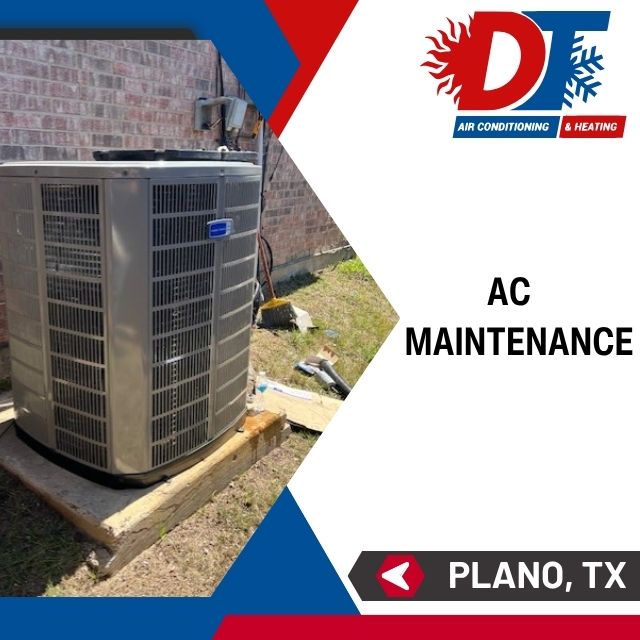
Professional AC maintenance in Plano, TX is a comprehensive seasonal inspection and tune-up that covers cleaning of condenser and evaporator coils, inspection and testing of all electrical components and connections, refrigerant level verification, thermostat calibration, condensate drain system cleaning, lubrication of all moving parts, blower motor and fan inspection, air filter replacement, and a full operational system test. The goal is to identify and correct small issues before they become failures. DT Air Conditioning & Heating performs thorough maintenance visits with written findings and no upsell pressure.
Why AC Maintenance Matters More in Plano Than Almost Anywhere Else
Most HVAC manufacturers design their systems around a national average climate that does not account for a North Texas summer. Plano regularly records 60 or more days above 90 degrees per year, and multi-week stretches above 100 are not unusual. That workload compresses wear that might take three or four years in a milder climate into a single season.
The consequences of skipping maintenance compound year over year:
- Dirty coils force the system to run longer to achieve the same cooling, driving up energy bills every month
- Low refrigerant from an undetected slow leak stresses the compressor, which is the most expensive component in the system
- Blocked condensate drains cause water backup that can damage your air handler, ceilings, and flooring
- Worn electrical contacts and failing capacitors cause unexpected shutdowns, often on the hottest days of the year
- Restricted airflow from a neglected filter accelerates wear on the blower motor and reduces indoor air quality
A system that receives annual professional maintenance consistently runs more efficiently, breaks down less, and lasts several years longer than one that does not. The math on maintenance is straightforward: the cost of a tune-up is a fraction of a single major repair call.
How Often Should an AC Unit Be Serviced in Plano, TX?
The industry standard recommendation is at least once per year for residential air conditioning systems. For Plano homeowners, our technicians recommend a slightly more proactive schedule based on the demands of the local climate:
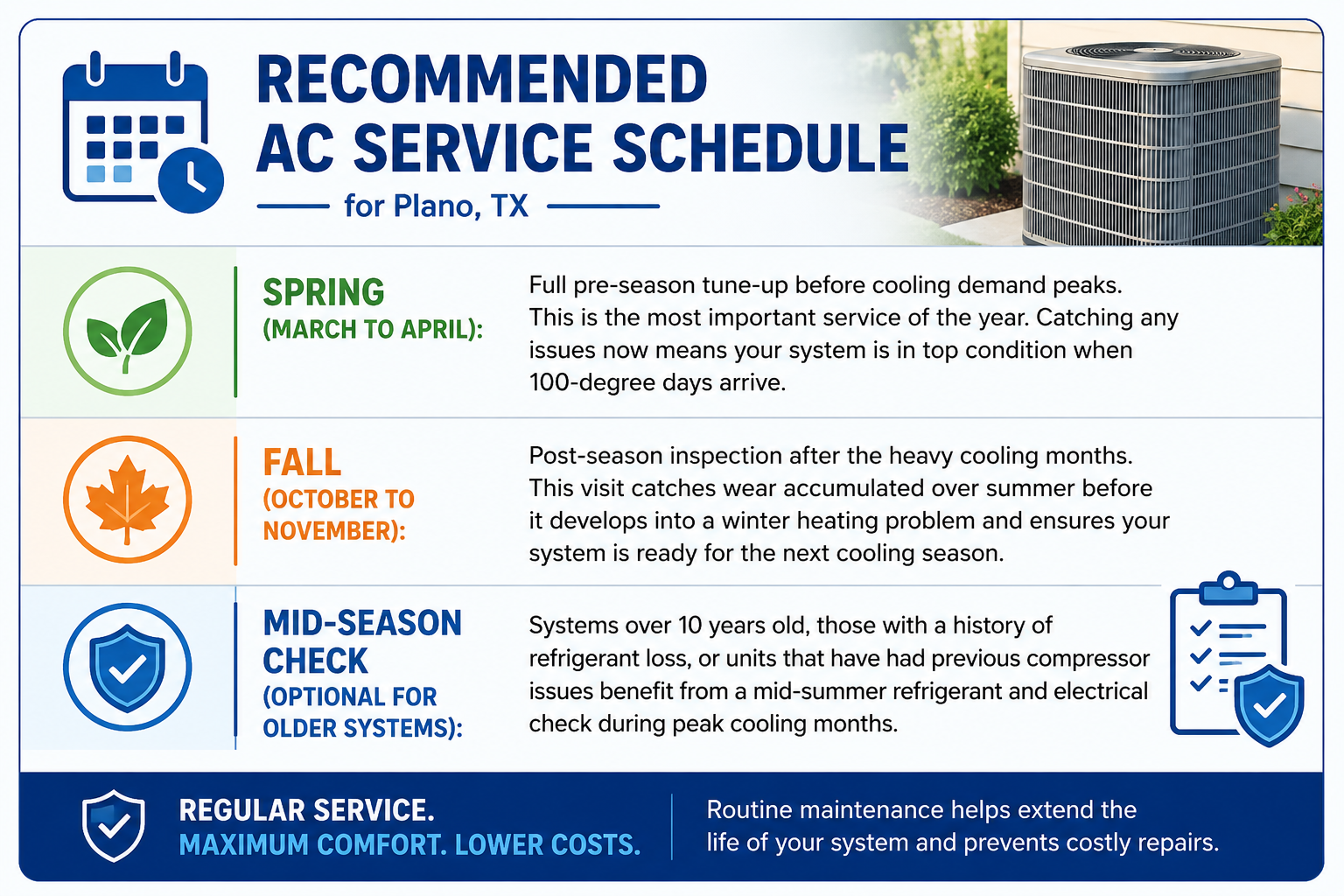
At a minimum, never go two full years without a professional inspection. A system that runs hard through a Plano summer without any maintenance is accumulating wear that a technician can identify and address before it causes a breakdown.
Homeowners should also check and replace their air filter every one to three months throughout the cooling season, regardless of when professional maintenance is scheduled. A clean filter is the single most impactful thing a homeowner can do between service visits.
What Is the 3-Minute Rule for AC?
The 3-minute rule is a standard HVAC practice that protects your compressor during power outages, power fluctuations, and when restarting your system after it has been shut off.
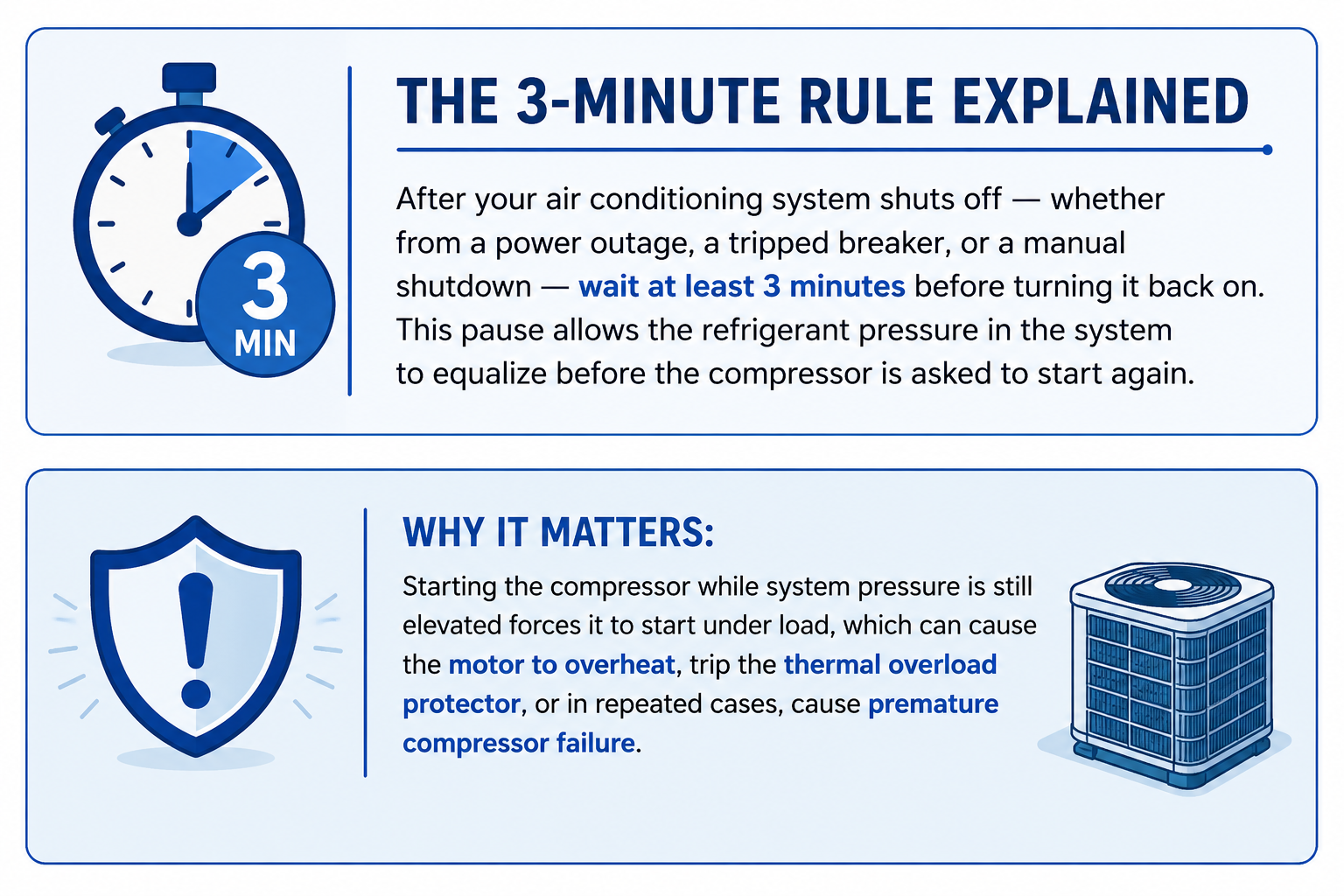
This is especially important in Plano during summer storm season when brief power outages are common. If the power flickers or goes out and comes back quickly, resist the urge to immediately restart your system. Give it three full minutes before switching it back on.
Modern thermostats with a built-in time-delay function handle this automatically. If your thermostat does not have this feature, it is worth asking about during your next maintenance visit — it is a simple way to protect a very expensive component.
What If My AC Won't Restart After a Power Outage?
If you have waited the full three minutes and your system still will not start, check the following before calling for service:
- Verify the thermostat is set to COOL and the set temperature is below the current room temperature
- Check your electrical panel for a tripped breaker on the AC circuit and reset it once if tripped
- Check for a separate disconnect switch near the outdoor unit and confirm it is in the ON position
- Inspect the indoor air handler for a safety float switch that may have tripped due to a full condensate pan
If none of these steps resolve the issue, the problem likely requires a technician. Call our team at 972-633-9343 and we will diagnose and fix the issue quickly.
What Are Signs of a Failing AC Compressor in Plano, TX?
The compressor is the most expensive component in your air conditioning system, and compressor failure is one of the primary reasons homeowners face the decision between a major repair and full system replacement. Catching early warning signs during regular AC maintenance in Plano, TX can prevent a minor issue from becoming a total compressor failure.
Here are the most reliable signs that your compressor is struggling:
The System Runs But Produces Little or No Cool Air
If your AC runs a full cycle but the air coming from your vents is warm or only slightly cooler than room temperature, the compressor may not be pressurizing refrigerant effectively. This is often the first functional sign that the compressor is weakening.
Hard Starting or Clicking Sounds When the System Turns On
A compressor that is beginning to fail often struggles to start. You may hear a clicking or stuttering sound from the outdoor unit as the system attempts to start and then shuts off before completing the startup sequence. This is sometimes called hard starting and can be addressed temporarily with a hard-start kit, but it is a clear sign the compressor needs evaluation.
The Outdoor Unit Vibrates or Makes Grinding or Rattling Noises
Unusual mechanical sounds from the outdoor unit — grinding, rattling, or a low rumbling that was not previously present — can indicate internal compressor damage. These sounds should never be ignored. Running a failing compressor to the point of complete seizure typically causes refrigerant contamination that makes system-wide damage far more expensive to address.
The System Repeatedly Trips the Circuit Breaker
A compressor that is drawing excessive current because of internal wear or a developing ground fault will cause the circuit breaker to trip. If you find yourself resetting the same breaker for your AC system more than once, do not keep resetting it. Each restart under those conditions risks more damage. Call for a diagnostic.
Refrigerant Oil Residue Around the Outdoor Unit
Oil staining or a greasy residue around the compressor housing or refrigerant lines can indicate a refrigerant leak that also contains compressor oil. This type of leak is serious and requires immediate professional attention.
If your system is showing any of these signs, schedule a diagnostic appointment as soon as possible. Our AC repair services in Plano, TX page explains how we evaluate compressor issues and what your options look like depending on system age and condition.
What Our AC Maintenance Service in Plano, TX Covers
At DT Air Conditioning & Heating, our maintenance visits are comprehensive, documented, and designed to give you a complete picture of your system's condition — not just a quick look that clears a calendar slot. Here is exactly what we cover on every visit:
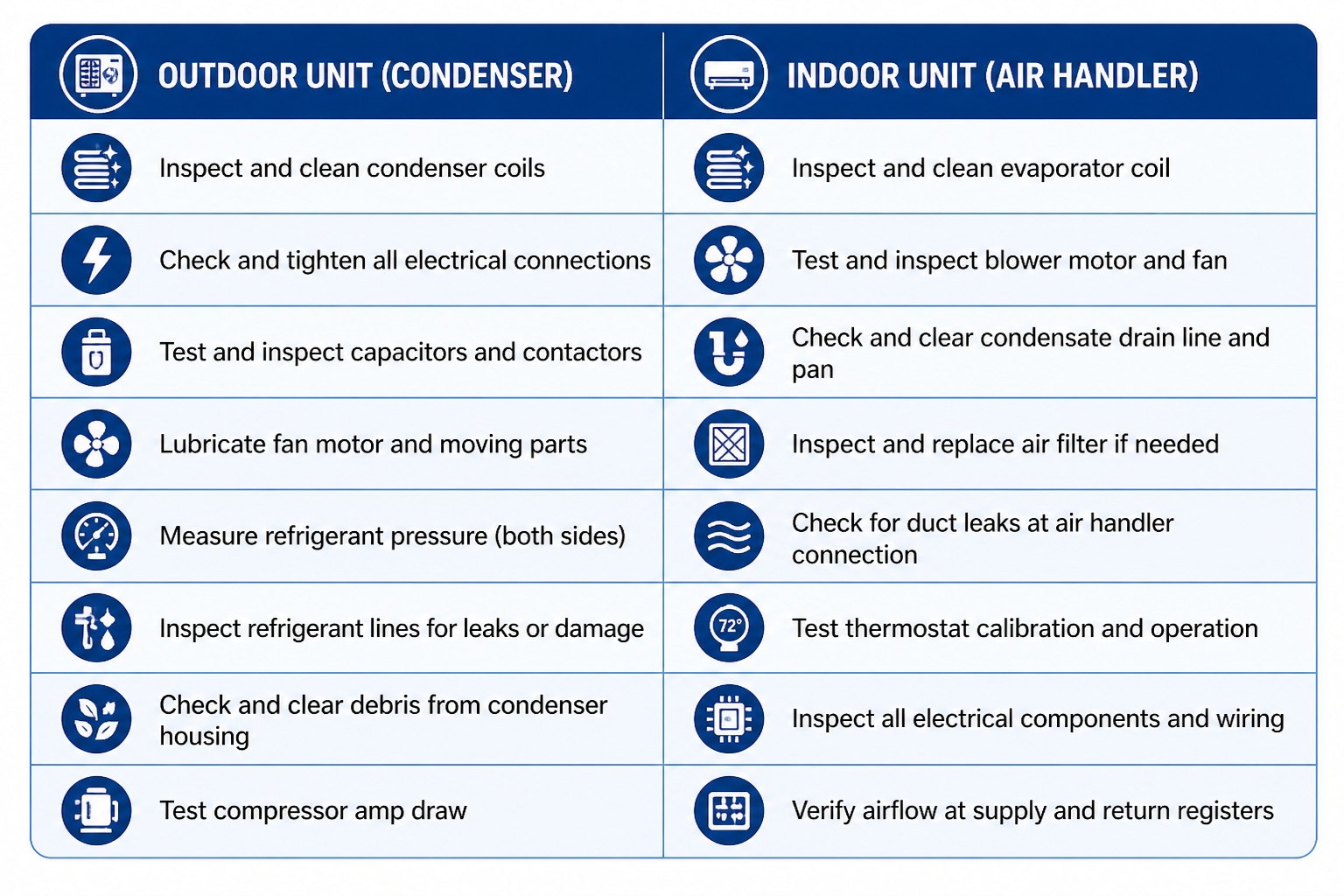
After every maintenance visit, we walk you through our findings and give you a written summary of the system's condition, any items we corrected, and any items to monitor. If we find something that requires repair, we explain it clearly and provide pricing before any additional work begins.
The Real Cost of Skipping AC Maintenance in Plano, TX
One of the most common things we hear when homeowners call for an emergency repair is that they had been putting off their maintenance visit for a year or two. The numbers consistently show why that is a costly habit:
- Energy costs: A system with dirty coils and low refrigerant can use 25 to 40 percent more electricity to produce the same cooling output as a properly maintained unit. In a Plano summer, that difference shows up clearly on your monthly bill.
- Repair frequency: Systems without regular maintenance break down at a significantly higher rate. Components that would be caught and corrected during a tune-up — a worn capacitor, a dirty drain line, a marginal refrigerant charge — become emergency repair calls when they fail without warning.
- System lifespan: Properly maintained systems routinely reach 15 to 17 years of service life in a Texas climate. Neglected systems often begin requiring major repairs or full replacement at 8 to 10 years. The difference in value over a system's lifetime is substantial.
- Warranty protection: Many manufacturer warranties require documented annual maintenance as a condition of coverage. Skipping maintenance can void warranty protection on expensive components like the compressor or heat exchanger.
If your system has not had professional maintenance in more than a year and is starting to show signs of wear, the right next step may be a combination of maintenance and targeted repair. Visit our AC repair services in Plano, TX page to understand how we approach systems that need both services at the same time.
When AC Maintenance Points Toward Replacement or Installation
Not every maintenance visit ends with a clean bill of health. Sometimes a thorough inspection reveals that a system is no longer a good candidate for continued service — that the cost of keeping it running outweighs the value it provides. Our technicians are trained to have that conversation honestly and without pressure.
Signs discovered during maintenance that may point toward replacement include:
- Refrigerant leaks in the evaporator or condenser coil on a system over 10 years old
- Compressor amp draw that is consistently at or above the rated maximum, indicating internal wear
- Multiple electrical component failures in the same service visit on an older system
- Visible corrosion on coils or the air handler cabinet that has compromised structural integrity
- An R-22 refrigerant system that requires recharging, given the cost and limited availability of that refrigerant
If a maintenance visit reveals that replacement is the more practical path, our team will walk you through the options. You can also review our AC replacement services in Plano, TX and AC installation services in Plano, TX pages for a full overview of what those processes involve.


Why Plano Homeowners Trust DT Air Conditioning & Heating for AC Maintenance
There are several HVAC companies in the Plano area offering maintenance services. Here is what makes our approach worth choosing:
- Thorough, documented maintenance visits with written findings on every call
- No upsell pressure — we recommend what your system actually needs, not what generates the most revenue
- Licensed and insured technicians on every maintenance visit
- Honest assessments: if your system needs a repair discovered during maintenance, we explain it clearly and price it before doing any additional work
- Local expertise: we know exactly what Plano summers do to residential HVAC equipment and we maintain accordingly
- Available for same-day appointments and emergency service when your system cannot wait
Call us at 972-633-9343, visit us at 6713 Oceanview Drive, Plano TX 75074, or schedule your maintenance visit online at www.dt-ac.com/contact.
Frequently Asked Questions
How long does a maintenance visit take?
A thorough AC maintenance visit typically takes 60 to 90 minutes for a standard residential system. If we discover issues that require additional cleaning or minor repairs, or if the system has not been serviced in several years, the visit may run longer. We do not rush through maintenance to clear a schedule — we do it completely.
Should I be home during the maintenance visit?
We ask that an adult homeowner or authorized representative be present during the visit so we can walk you through our findings at the end of the appointment. You do not need to stay with the technician during the service, but being available when they finish ensures you understand exactly what was found and what was done.
What should I do before a maintenance visit?
Make sure your outdoor condenser unit is accessible and clear of any debris, furniture, or landscaping that has grown close to the unit. If you have a pet, secure them so the technician can move freely between indoor and outdoor access points. Other than that, no preparation is required on your end.
Does maintenance improve energy efficiency?
Yes, consistently and measurably. Clean coils, properly charged refrigerant, clear drain lines, and a calibrated thermostat all contribute directly to system efficiency. Studies and real-world service data consistently show that a well-maintained system uses less energy per hour of operation than a neglected one. In a Plano summer with months of continuous cooling demand, that efficiency difference adds up to meaningful savings.
My system seems to be working fine. Do I still need maintenance?
Yes. Many of the conditions that lead to major failures develop slowly and produce no obvious symptoms until the system fails completely. A refrigerant leak that started small will eventually reach a level where the compressor is damaged. A capacitor that is weakening will eventually fail to start the system on the hottest day of the year. Maintenance catches these issues while they are still small and inexpensive to correct.
Do you offer maintenance plans or agreements?
Yes. Ask our team about maintenance agreement options when you contact us. Scheduled maintenance agreements typically include priority scheduling, documented service records, and the peace of mind of knowing your system is professionally serviced on a consistent schedule. Call us at 972-633-9343 or visit www.dt-ac.com/contact to ask about available options.
What if the technician finds something wrong during maintenance?
We tell you exactly what we found, explain what it means for your system's performance and reliability, and provide clear pricing before any repair work begins. You are never obligated to proceed with additional work based on findings during a maintenance visit. Our job is to give you accurate information so you can make the right decision for your home and budget.